Les anglonautes

About | Search | Vocapedia | Learning | Podcasts | Videos | History | Culture | Science

 Previous Home Up Next


learning > grammaire anglaise - niveau avancé


syntaxe


elision


élision > contraction


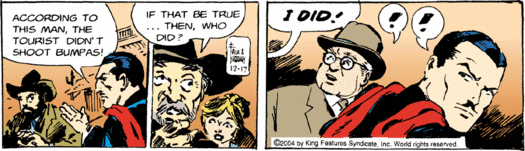
whodunit:

colloquial elision of "Who [has] done it?"

https://en.wikipedia.org/wiki/
Whodunit

https://en.wikipedia.org/wiki/
Elision


élision > apostrophe


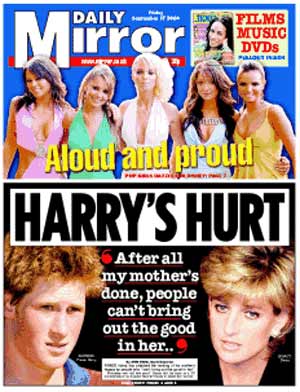
Harry's hurt


énoncé théorique :

Harry is hurt


16 September 2004


L'apostrophe

peut marquer l'élision / la disparition

de une ou plusieurs lettres :


rock 'n' roll

=

rock and roll


From the 16th century,

following French practice,

the apostrophe was used

when a vowel letter was omitted

either because of incidental elision

("I'm" for "I am")

or because the letter no longer

represented a sound

("lov'd" for "loved").


English spelling retained many inflections

that were not pronounced as syllables,

notably verb endings

("-est", "-eth", "-es", "-ed")

and the noun ending "-es",

which marked either plurals or possessives,

also known as genitives

(see Possessive apostrophe, below).


An apostrophe followed by (s)

was often used to mark a plural;


specifically,

the Oxford Companion

to the English Language notes:

"There was formerly a respectable tradition

(17th to 19th centuries)

of using the apostrophe for noun plurals,

especially in loanwords ending in a vowel

(as in ... Comma's are used,

Philip Luckcombe, 1771)

and in the consonants s, z, ch, sh,

(as in waltz's and cotillions,

Washington Irving, 1804)..."


Standardisation


The use of elision has continued

to the present day,

but significant changes have been made

to the possessive and plural uses.


By the 18th century,

an apostrophe with the addition of an (s)

was regularly used

for all possessive singular forms,

even when the letter (e) was not omitted

(as in "the gate's height").


This was regarded

as representing not the elision of the (e)

in the "-e" or "-es" ending of the word being pluralized,

but the elision of the (e)

from the Old English genitive singular inflection "-es".


The plural genitive did not use the "-es" inflection,

and since many plural forms already consisted

of the "-s" or "-es" ending,

using the apostrophe in place of the elisioned (e)

could lead to singular and plural possessives

of a given word

having the exact same spelling.


The solution was to use an apostrophe

after the plural (s)

(as in "girls' dresses");


however,

this was not universally accepted

until the mid-19th century.


Plurals not ending in -s

keep the -'s marker,

such as "children's toys, the men's toilet",

since there was no risk of ambiguity.


Wikipedia - 5 July 2026

https://en.wikipedia.org/wiki/Apostrophe


'S

marque du génitif


CNN's

new Little Richard documentary

is a worthy tribute to the rock 'n' roll legend


September 4, 2023    NPR


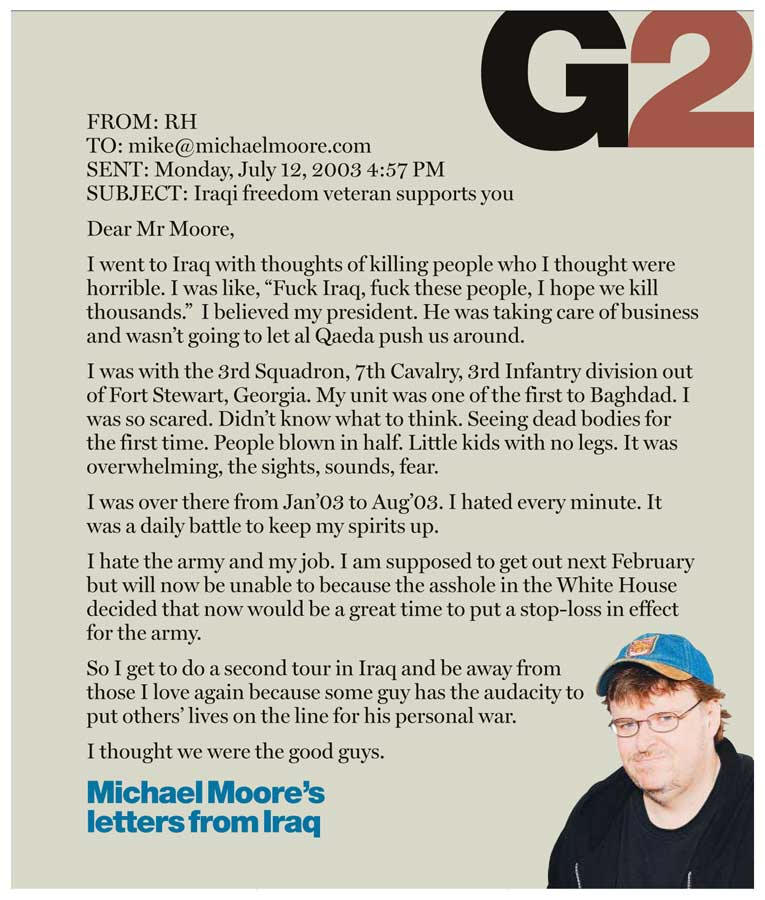
'S

marque du génitif


The Guardian    G2 frontpage    4 October 2004


'S

forme contractée de is


24 September 2004


16 September 2004


apostrophe > autres énoncés


L'apostrophe remplace

une ou plusieurs lettres :


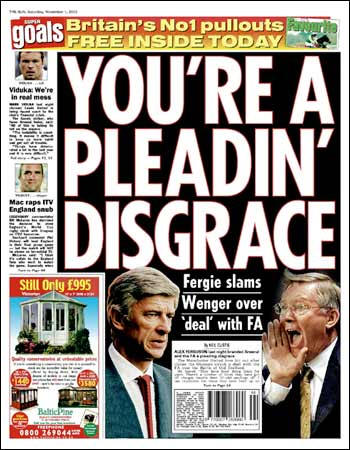
You're a pleadin' disgrace


énoncé théorique :

You are a pleading disgrace


Sun Sport frontpage

2 November 2003


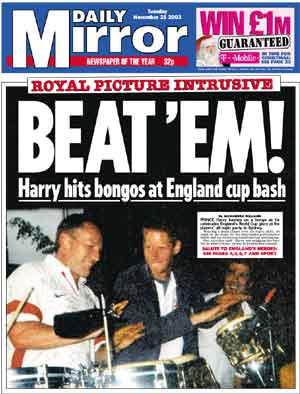
BEAT'EM


énoncé théorique :

beat them


Daily Mirror

25 November 2003


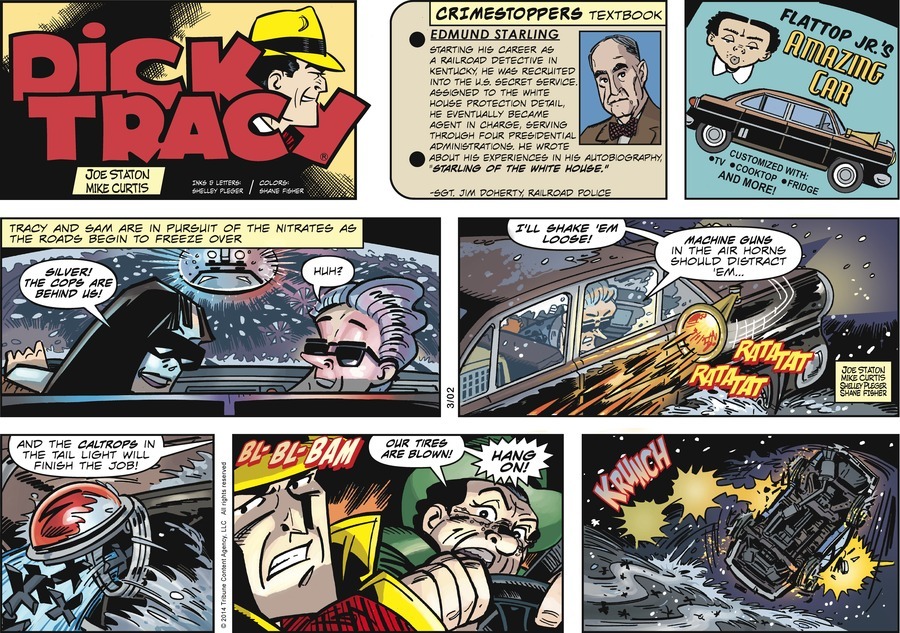
I'll shake 'em loose!


Dick Tracy

by Joe Staton and Mike Curtis

GoComics

March 02, 2014


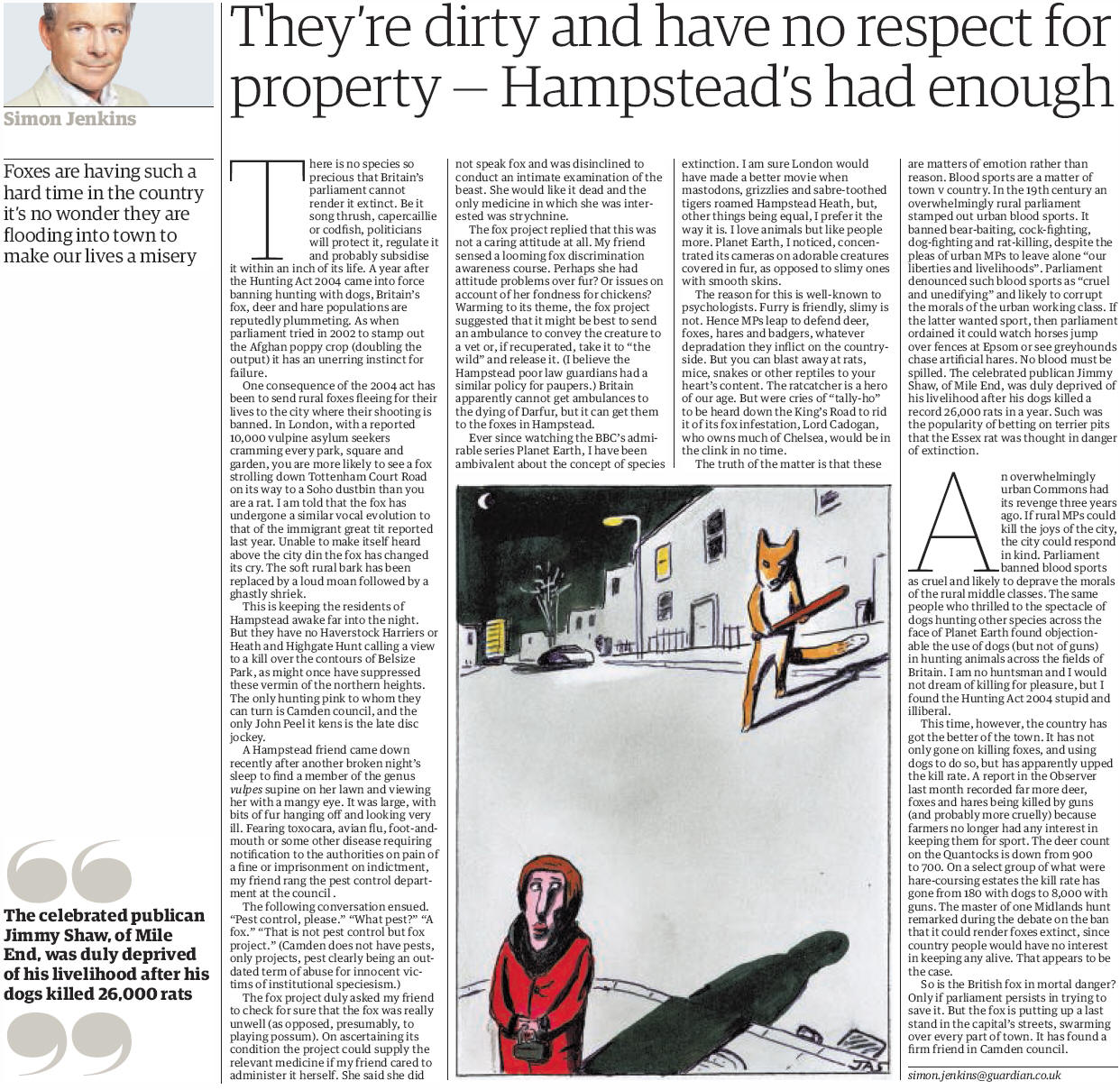
The Guardian    p. 18    26 January 2009

http://digital.guardian.co.uk/guardian/2009/01/26/
pdfs/gdn_090126_ber_18_21768796.pdf


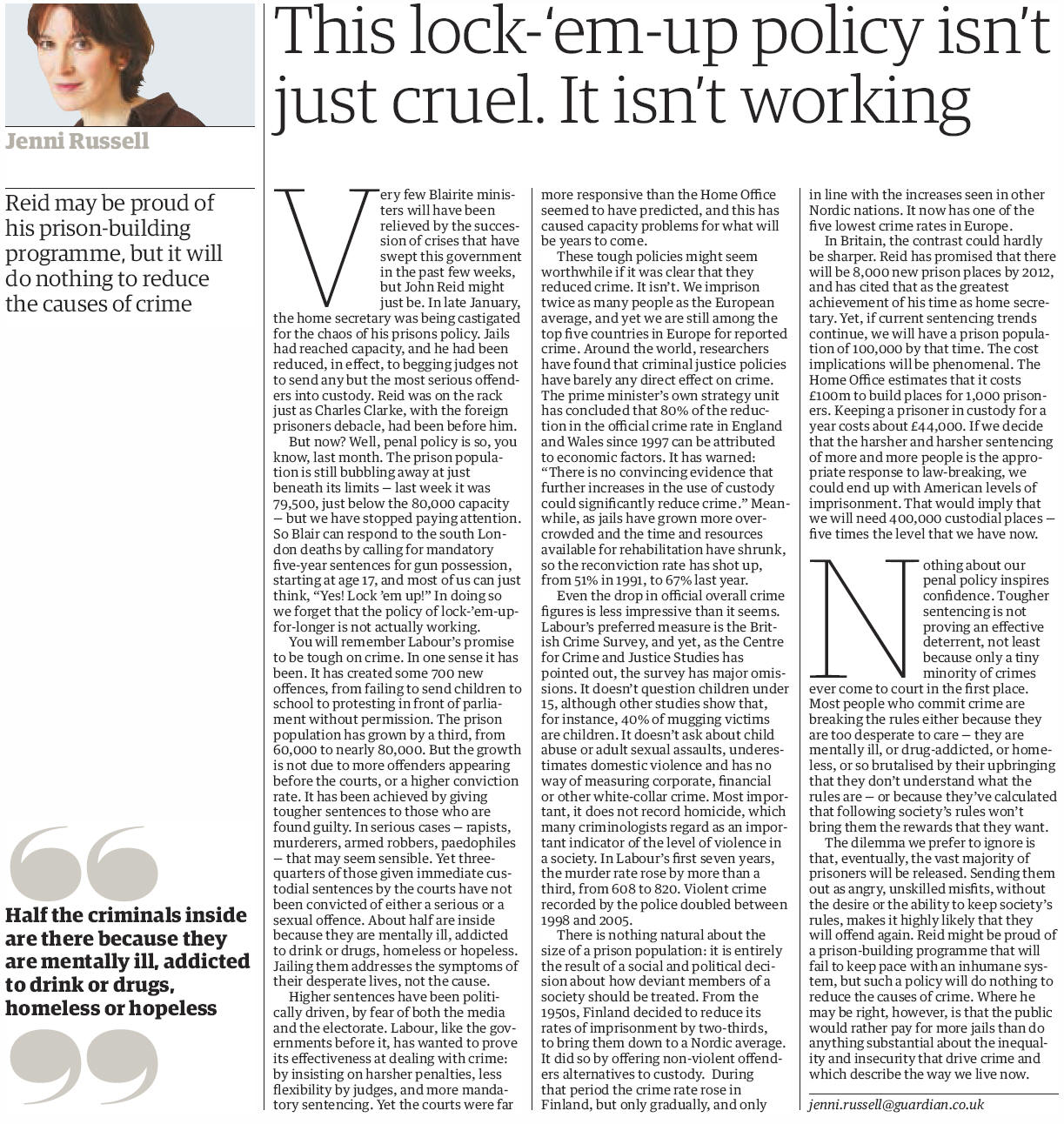
I'll die when I want to


Cet énoncé comprend

une élision de 2 lettres (wi)

marquée par l'apostrophe,

puis une ellipse (Ødie).


Enonce théorique :

I will die when I want to die


valeur énonciative / effet énonciatif :

l'ellipse de die donne à l'énoncé

un effet lapidaire, tranchant,

ainsi qu'une valeur de détermination absolue,

irrévocable.


Traduction explicative :

Je déciderai de mourir quand je le veux.

Point final,

il n'y a pas à discuter.


The Guardian    p. 7    15 August 2006


The Guardian    p. 19    15 July 2006


The Guardian    p. 35    9 March 2007


The Guardian    p. 31    26 March 2007


The Guardian    10 June 2004


The Guardian    p. 30    21 May 2005

http://digital.guardian.co.uk/guardian/2005/05/21/pages/brd30.shtml


Read 'em and weep


Being asked to judge a major fiction prize may be a huge privilege, but there's more to it than just reading a mountain of novels.

As the winner of this year's Orange prize is announced, Katharine Viner, the editor of Guardian Weekend and one of the five judges, reflects on weeks of hard graft, moments of panic and at least one day spent in tears

Headline and sub,
G,
9.6.2004,
https://www.theguardian.com/books/2004/jun/09/
orangeprizeforfiction2004.orangeprizeforfiction


We’ll [ Ø = will ] prove you can take time off for the trip

you’ve  [ Ø = have ] always dreamed of.

Hit the road ad, T2, p. 6, 7.3.2002.


autres énoncés > ellipses ( Ø ), élisions


Summer's greatest rock festival

returns to the stage

and the atmosphere's [ is ] great, man

Headline, I, p. 7, 18.10.2002


Here's [ is ] what's [ is ] waiting for you

in Ken Fisher's Stock Market Outlook

Ad, R, 1.12.2003.


Texas Execution [ Ø = is ] Stayed

Based on Race Testimony


September 16, 2011

The New York Times

By MANNY FERNANDEZ


HOUSTON — In May 1997, a psychologist took the stand in a courtroom here during the sentencing hearing of Duane E. Buck, a black man found guilty of killing his former girlfriend and her friend.

The psychologist, Walter Quijano, had been called by the defense, and he testified that he did not believe Mr. Buck would be dangerous in the future. But on cross-examination, the prosecutor asked Dr. Quijano more detailed questions about the factors used to determine whether Mr. Buck might be a danger later in life.

“You have determined that the sex factor, that a male is more violent than a female because that’s just the way it is, and that the race factor, black, increases the future dangerousness for various complicated reasons,” the prosecutor asked Dr. Quijano. “Is that correct?”

“Yes,” the psychologist replied.

That statement, and how it was handled by the Harris County District Attorney’s Office, helped spare Mr. Buck from the death chamber on Thursday, and has become the center of a case that has raised questions about the role of race in the Texas criminal justice system at a time when Gov. Rick Perry’s support of the death penalty has become a factor in his campaign for the Republican presidential nomination.

Mr. Buck, 48, had been scheduled to be executed on Thursday evening, but the Supreme Court intervened, granting a temporary stay of execution pending a decision about whether it will review an appeal of his case. Mr. Buck’s lawyers had argued that his death sentence was based, at least in part, on his race, and that in carrying out his execution, the state would violate the Equal Protection Clause of the Constitution, which prohibits discrimination by state governments.

At Mr. Buck’s sentencing hearing in 1997, the Harris County prosecutor told the jury in her closing argument to rely on the psychologist’s expert testimony, telling the jury: “You heard from Dr. Quijano, who had a lot of experience in the Texas Department of Corrections, who told you that there was a probability that the man would commit future acts of violence.”

In 2000, while the case was on appeal, the state attorney general at the time, John Cornyn, made an unusual announcement, conceding error in Mr. Buck’s case and six others in which the government had relied on race as a factor in sentencing. Mr. Cornyn, now a United States senator, stated that if the lawyers for the defendants in those cases challenged the government’s reliance on race at sentencing, he would not object. All of those cases centered on testimony from Dr. Quijano, a former chief psychologist for the state prison system.

“The people of Texas want and deserve a system that affords the same fairness to everyone,” Mr. Cornyn said then.

Of the defendants, all of whom were on death row, Mr. Buck was the only one who had not been granted a new sentencing hearing. The others were later re-sentenced to death.

The efforts to stop Mr. Buck’s execution drew widespread support. Linda Geffin, a former assistant district attorney in Harris County who helped prosecute Mr. Buck, wrote a letter to state officials, including Mr. Perry, asking them to halt the execution, writing that it was regrettable that “any race-based considerations were placed before Mr. Buck’s jury.” In addition, a survivor of Mr. Buck’s attack, Phyllis Taylor, had urged the Texas Board of Pardons and Paroles and the governor to halt the execution.

Ms. Taylor was a friend of Mr. Buck’s former girlfriend, Debra Gardner. Mr. Buck’s lawyers have not denied his guilt in the case: In July 1995, about a week after they had ended their relationship, Mr. Buck barged into Ms. Gardner’s house in Houston with a rifle and a shotgun and opened fire, killing Ms. Gardner and one of her friends, Kenneth Butler, while injuring Ms. Taylor. Ms. Gardner’s two children saw Mr. Buck shoot her.

Sixteen years later, Ms. Taylor met with a lawyer in Mr. Perry’s office and a member of the state parole board in recent days, urging them to grant clemency. The parole board, however, later recommended against clemency.

In papers filed with the Supreme Court on Thursday, lawyers for the Texas attorney general, Greg Abbott, wrote that Mr. Buck’s constitutional rights were not violated and that Mr. Abbott had, in 2005, determined that Mr. Buck’s case was not similar to the other cases involving Dr. Quijano’s testimony. “Buck called Quijano, and Buck opened the door to this issue,” the lawyers wrote. “The prosecutor’s cross-examination on this topic merely asked Quijano to restate what he had said on direct. But neither Quijano nor the state suggested to the jury that they rely on race as a factor in deciding that Buck would be a future danger.”

Mr. Perry, who has the power to grant a 30-day stay of execution, was campaigning in Iowa on Thursday. He has rarely granted clemency in capital-punishment cases, overseeing more than 230 executions since he took office in December 2000. At a debate last week among the Republican presidential candidates in California, Mr. Perry was asked if he had lost sleep over his record of executions, and he replied, “No, sir, I’ve never struggled with that at all.”

Officials with the state prison agency, the Department of Criminal Justice, were informed at 7:40 p.m. Thursday that the Supreme Court had granted a stay of execution. Mr. Buck had already eaten his last meal of fried chicken, fried fish, salad, jalapeno peppers, apples and an iced tea. Under state law, executions can be carried out in a six-hour window from 6 p.m. to midnight. One of Mr. Buck’s lawyers, Kate Black, with the Texas Defender Service, called him to tell him the news.

Jason Clark, a spokesman for the prison agency, said of Mr. Buck: “He was praying when I walked over. He stopped praying and said, ‘Praise the Lord Jesus.’ ”

Texas Execution Stayed Based on Race Testimony,
NYT,
16.9.2011,
http://www.nytimes.com/2011/09/17/us/
experts-testimony-on-race-led-to-stay-of-execution-in-texas.html


At £7,500 for the set,

you'd [ would ] think

they'd [ would ] get their facts right


Yet the growing number of mistakes coming to light in the dictionary's pages threatens to make it an embarrassment, and some leading scholars even fear the new edition of the DNB is endangering the international reputation of the whole university city of Oxford.

This month a heated row that began on the letters pages of literary and historical journals late last year has forced the editors of the dictionary to publicly defend their work. Errors in the biographies of significant historical figures such as Florence Nightingale, Jane Austen and George V are more than just minor details, say the DNB's detractors. In the case of Nightingale, experts argue, the factual and interpretational blunders will damage modern understanding of a unique medical practitioner and theorist.

Headline, sub and first §§, O, 6.3.2005,
https://www.theguardian.com/uk/2005/mar/06/
books.highereducation


Who'd [ would ] be a goddess?


She cooks like an angel, looks like an angel,

but suffered halo slip

when she gained a second husband

so soon after losing her first.

Nigella Lawson talks to Sally Vincent

about love, death, the perils of glamour,

and why teatimes were torture

when she was a little girl

Headline and sub,
G, 16.10.2004,
https://www.theguardian.com/lifeandstyle/2004/oct/16/
foodanddrink.shopping


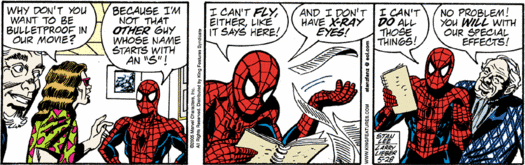
Spiderman   
Stan Lee    28.5.2005

http://www.kingfeatures.com/features/comics/spidermn/about.htm


Mandrake    Fred Fredericks    Created by Lee Falk    17.12.2004

http://www.kingfeatures.com/features/comics/mandrake/about.htm


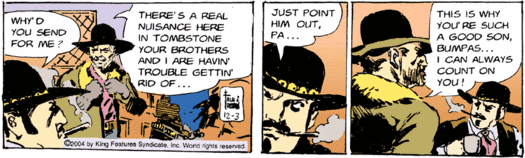
Mandrake    Fred Fredericks    Created by Lee Falk    3.12.2004

http://www.kingfeatures.com/features/comics/mandrake/about.htm


The day [ Ø = when ] the peace was lost

Web frontpage headline,
IoS, 19.9.2004, full text,
http://news.independent.co.uk/world/middle_east/
story.jsp?story=563406 - broken link


Gangsta culture [ Ø = is ] a deadly virus,

says top TV presenter


One of the best known black personalities on British TV

said yesterday that 'gangsta' street culture

was a 'deadly virus' that was destroying a generation

of African-Caribbean boys.

Headline and §1, O, 12.9.2004,
https://www.theguardian.com/uk/2004/sep/12/
schools.society


The Bill Clinton [ Ø = whom / that ] I knew


The Middle East, Northern Ireland, Kosovo,

campaigning over Aids, easing of world debt

- we should remember Bill Clinton for far more

than a sex scandal,

says Alastair Campbell

Headline and sub,
O, 27.6.2004,
https://www.theguardian.com/politics/2004/jun/27
/foreignpolicy.usa 


Delta Air Can't Survive

as [ Ø = it ] Is - CEO

Headline, R,
http://www.reuters.com/newsArticle.jhtml;jsessionid=
FAA3JCMP3M5FICRBAEOCFFA?type=businessNews&storyID=5440092


Release him,

charge him or break international law,

Bush [ Ø = is ] told

Red Cross ultimatum to US on Saddam,
G,
14.6.2004,
https://www.theguardian.com/world/2004/jun/14/
iraq.usa2


Tell your momma, tell your pa,

Gonna move you back to Arkansas.

All right, baby what'd [ did ] I say?

Whoa, all right, baby what'd [ did ] I say?

Ray Charles, What'd I Say.


The day [ Ø = when ]

the tanks arrived at Rafah zoo

Headline,
G,
22.5.2004,
https://www.theguardian.com/world/2004/may/22/
israel


Your number appears on the polythene bag

[ Ø = which / that ]

your magazine is delivered in.

NewScientist suscription ad, 29.1.2004,
http://www.qssa.co.uk/
new_scientist/default.asp?promcode=1645 - broken link


Later on Christmas day, scientists

at the giant Jodrell Bank radio telescope in Cheshire

turned the 76m dish towards Mars

in the hope of detecting Beagle's call sign,

a signal no stronger than a mobile phone's

[ Ø = signal ].

Silence from Mars: hopes fade for missing Beagle,
G,
27.12.2003,
https://www.theguardian.com/science/2003/dec/27/
spaceexploration.research


Tis the season to be silly


[ Ø = you ] Thought Bowie and Bing

were the height of kitsch?

That Noddy Holder was as crass as it could get?

Think again. Dave Simpson picks the 12 oddest

Christmas hits... ever!

Headline and sub,
G,
28.11.2003,
https://www.theguardian.com/music/2003/nov/28/
3 


 [ Ø = Are you ] Buying or selling a used car?

Ad, Mirror frontpage, 1.11.2003.


 [ Ø = Are you ] Looking for a cheap flight?

Ad, Mirror frontpage, 1.11.2003.


I bet he's [ has ] told you

he's [ is ] not sleeping with his wife.

Private Lives,
GE/GE2, p. 8, 02.11.2001.


"But I [ Ø = have ] been arrested five times,"

he said, "for singing."

Singing the Blues as Quarter Cracks Down,
NYT/Le Monde, 17/18.11.2002.


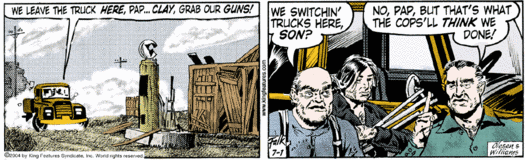
The Phantom

George Olesen and Graham Nolan

Created by Lee Falk    1 July 2004

http://www.kingfeatures.com/features/comics/phantom/about.htm


Guardian    23 June 2004


Voir aussi > Anglonautes >

Grammaire anglaise explicative- niveau avancé


syntaxe > ellipse


présupposé :

questions en be + -ing

avec ellipse de be


passif

avec ellipse de beauxiliaire


expressions du futur :

futur programmé > (be) + to -> Base Verbale


be + -ing


Voir aussi > Anglonautes >

Grammaire anglaise explicative - niveau avancé


syntaxe >

séquences auxilaires / verbales :


active ≠ passive,

affirmative ≠ négative,

interrogative,

interro-négative,

infinitive,

impérative,

exclamative,

comparative,

elliptique,

résultative,

hypothétique


syntaxe > autres séquences :


toviseur,

ellipse,

SVO, OSV,

séquences -ing,

séquences -en,

clivée,

as...as


home Up