|
|
|
Photographers born late 18th century - early / mid 19th century
Denmark, France, UK, USA
The Weird World of Eadweard Muybridge YouTube > Cinephilia and Beyond https://www.youtube.com/watch?v=5Awo-P3t4Ho
Man Ray USA, FR 1890-1976
born Emmanuel Radnitzky
https://en.wikipedia.org/wiki/
https://fr.wikipedia.org/wiki/
https://www.criterion.com/films/
https://www.theguardian.com/artanddesign/2023/may/01/
https://www.theguardian.com/artanddesign/2018/jan/16/
https://www.theguardian.com/artanddesign/2015/jun/04/
https://www.theguardian.com/commentisfree/2013/may/23/
https://www.theguardian.com/artanddesign/2013/apr/17/
https://www.nytimes.com/1976/11/19/
Jun Fujita / 藤田 準之助 USA 1888-1963
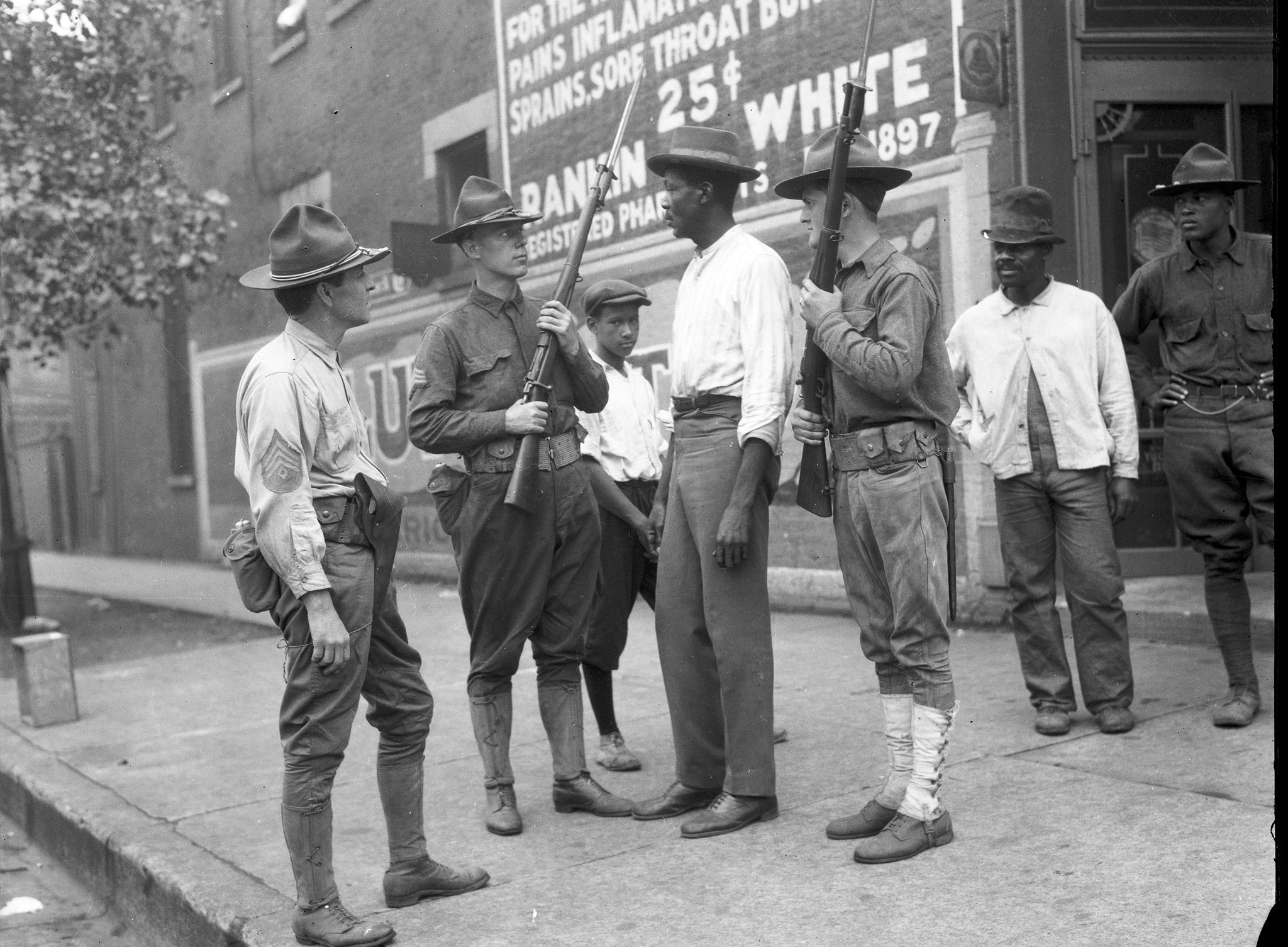
Anglonautes' note: this photograph was probably taken during the Chicago race riot of 1919.
Photograph: Jun Fujita
Jun Fujita: Behind the Camera by Graham Harrison Lee Hat and Beard Press November 2025 https://hatandbeard.com/products/fujita-behind-the-camera
Jun Fujita was a Japanese immigrant who became a pioneering photojournalis and poet in Chicago during the first half of the 1900s.
Fujita was not only a witness to momentous events in Chicago’s history; his photographs of these news events shaped the way they were recorded.
He used photography to humanize inhumanity and to make legendary figures more life-sized.
Despite his ethnic background and limited English, Fujita became a celebrated, somewhat swashbuckling member of the staunchly segregated city’s society, counting everyone from Carl Sandburg to Al Capone as friends.
Yet he had to fight to avoid being sent to an internment camp during World War II, and he and his white wife refused to have children, fearing the prejudice biracial children faced.
His story opens a window into many of the political, social, and cultural struggles of the country at that time.
(...)
He was also an acclaimed poet with ties to Harriet Monroe of Chicago’s Poetry magazine.
In the 1920s, he authored the highly regarded Tanka: Poems in Exile, considered to be the first American collection of Japanese tanka poetry. https://hatandbeard.com/products/fujita-behind-the-camera
Disasters, riots, gangsters and construction … early 20th-century Chicago is seen here through the lens of the pioneering Japanese-American photojournalist, poet and artist Jun Fujita.
https://www.theguardian.com/artanddesign/gallery/2025/nov/09/
https://en.wikipedia.org/wiki/
https://en.wikipedia.org/wiki/
https://www.theguardian.com/artanddesign/gallery/2025/nov/09/
Augustus Frederick Sherman USA 1865-1925
American clerk and photographer.
He worked in senior clerical positions at Ellis Island.
He was there briefly in 1893 as a clerk in the Executive Division; and permanently, in more senior positions, from 1895 to 1925.
He was division chief, with the title of chief clerk, 1909–1921; and, finally, confidential secretary to the Commissioner, 1921–1925.
In 1916, in the absence of the Commissioner and the Assistant Commissioner, Sherman took over routine affairs on the island, as he was regarded as third in command.
He was an untrained, yet highly gifted photographer who created hundreds of images documenting the new arrivals to America.
Sherman was fascinated by the diverse origins and cultural backgrounds of his subjects, nd created a series of portraits offering viewers a perspective on this period in American history.
https://en.wikipedia.org/wiki/
https://en.wikipedia.org/wiki/
https://www.theguardian.com/culture/gallery/2016/oct/02/
https://www.nytimes.com/2005/08/10/
Mary Bayard Morgan Wootten USA 1875-1959
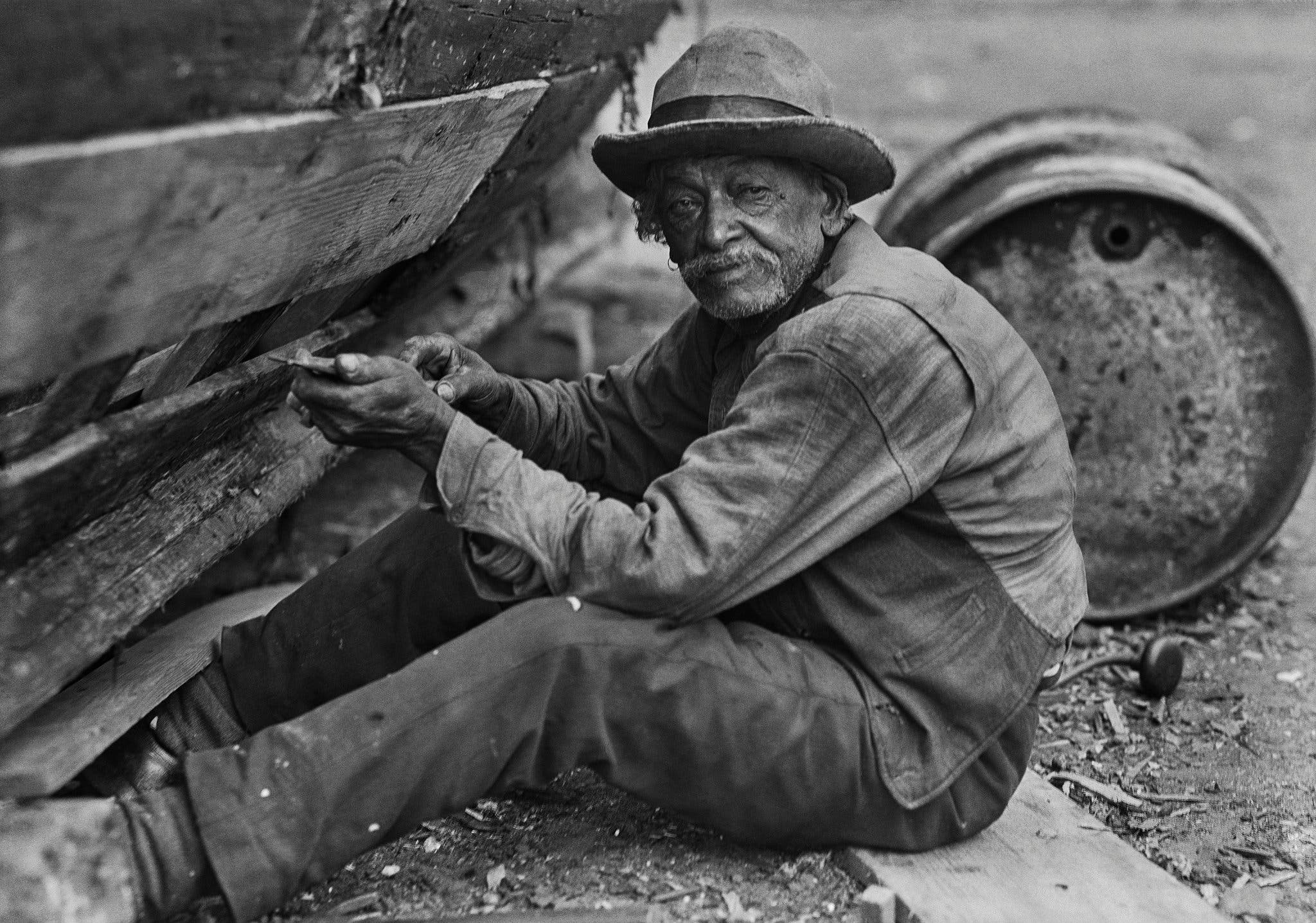
“Boat Mender,” Charleston, S.C., circa 1933.
Photograph: Bayard Wootten North Carolina Collection, UNC Chapel Hill Libraries
Single Mother, Pioneering Photographer: The Remarkable Life of Bayard Wootten NYT Single Mother, Pioneering Photographer: The Remarkable Life of Bayard Wootten
https://www.nytimes.com/slideshow/2018/01/29/
https://en.wikipedia.org/wiki/
https://www.nytimes.com/slideshow/2018/01/29/
George Hubert Wilkins Australia 1888-1958
From documenting the first world war to attempting to pass under the north pole by submarine, Sir George Hubert Wilkins lived a life of adventure and intrigue.
https://www.theguardian.com/artanddesign/gallery/2022/jan/23/
https://en.wikipedia.org/wiki/
https://www.theguardian.com/artanddesign/gallery/2022/jan/23/
Edward Weston USA 1886-1958
Moving from one avant garde movement to another during the 1920s, the American photographer’s work helps tell the story of the birth of modernism
https://www.theguardian.com/artanddesign/gallery/2025/dec/17/
https://en.wikipedia.org/wiki/
https://www.theguardian.com/artanddesign/gallery/2025/dec/17/
William Henry Jackson USA 1843-1942
American painter, Civil War veteran, geological survey photographer and an explorer famous for his images of the American West. https://en.wikipedia.org/wiki/William_Henry_Jackson
https://en.wikipedia.org/wiki/
Northcote Whitridge Thomas UK 1868-1936
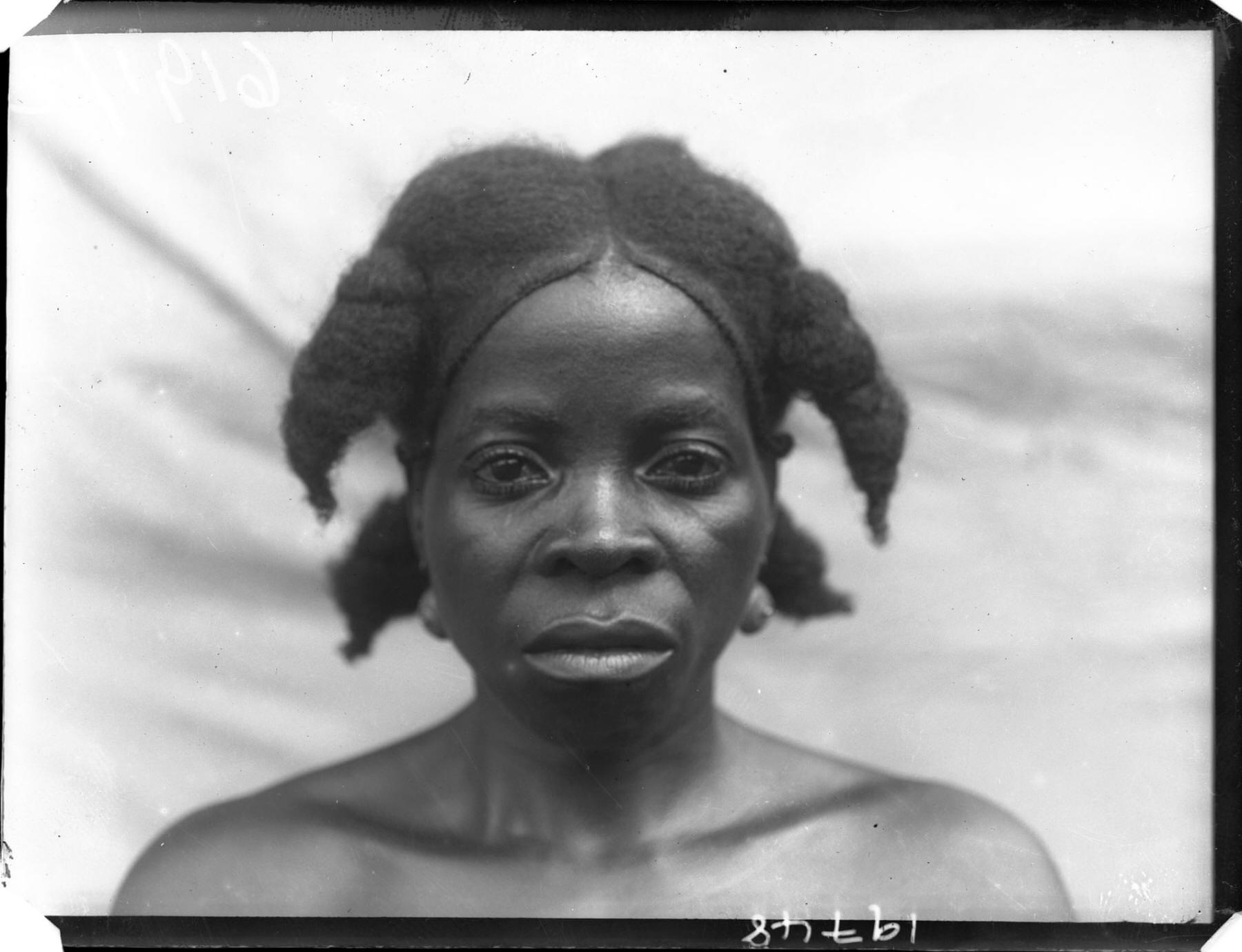
Yainkain, Head wife of Chief Sehi Bureh of Tormah, Tormabum, Southern Province, Sierra Leone, 1915
Some of the responses included: ‘She looks very motherly.’ ‘She looks like she’s got a lot of responsibilities.’
‘Her face in and of itself doesn’t look sad, but her eyes look very sad.
Not because of what she’s doing or where she is, but something ages ago, like there is a long, long deep sadness’
Confronting the colonial archive – in pictures British colonial anthropologist Northcote Thomas took thousands of photographs and sound recordings of men, women and children in west Africa between 1909 and 1915.
Some of these works, which reflect the reprehensible colonial mindset, feature in short Faces|Voices – winner of this year’s Arts and Humanities Research Council (AHRC) Best Research Film of the Year Award – in which Londoners respond to the faces of these people. Here’s a selection of the original images G Tue 19 Nov 2019 07.00 GMT
https://www.theguardian.com/artanddesign/gallery/2019/nov/19/
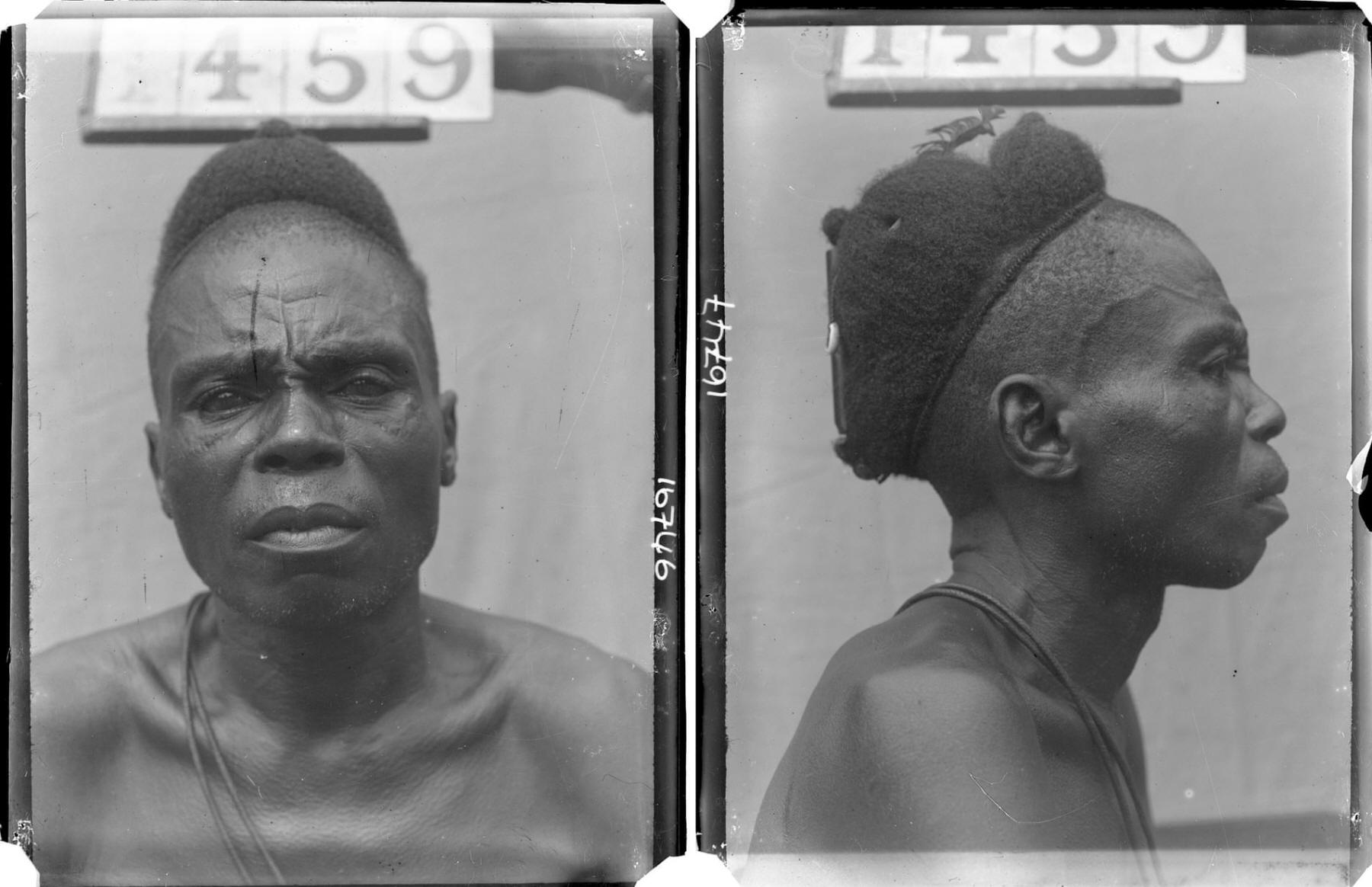
A chief, Kokori, Delta State, Nigeria, 1910
One woman in the film says: ‘Any recording of our people – African people – from my perspective as an African woman is important because much of our history has been subjugated, maligned, buried, distorted.
So even though one could say that the general context within which these pictures were taken was one of violence, I still think the fact that we have these images is important.
We know these people existed.
They leave traces, memories, contributions to knowledge that we can learn from.’ (Quotes above and below from the responses in Faces|Voices)
Confronting the colonial archive – in pictures British colonial anthropologist Northcote Thomas took thousands of photographs and sound recordings of men, women and children in west Africa between 1909 and 1915.
Some of these works, which reflect the reprehensible colonial mindset, feature in short Faces|Voices – winner of this year’s Arts and Humanities Research Council (AHRC) Best Research Film of the Year Award – in which Londoners respond to the faces of these people. Here’s a selection of the original images G Tue 19 Nov 2019 07.00 GMT
https://www.theguardian.com/artanddesign/gallery/2019/nov/19/
British colonial anthropologist Northcote Thomas took thousands of photographs and sound recordings of men, women and children in west Africa between 1909 and 1915.
https://www.theguardian.com/artanddesign/gallery/2019/nov/19/
https://en.wikipedia.org/wiki/
https://www.theguardian.com/artanddesign/gallery/2019/nov/19/
David Francis Barry USA 1854-1934
photographer of the American West
https://en.wikipedia.org/wiki/
Frederick Hollyer UK 1838-1933
Frederick Hollyer adapted new technical developments in photography to create a unique visual record of London life at the dawn of the 20th century.
His portrait photographs offer us a glimpse into late-Victorian and Edwardian celebrity culture.
The Victoria and Albert Museum holds a remarkable collection of Hollyer portraits - nearly 200 platinum prints contained in three chintz-covered albums - and also some of his reproductions. https://www.vam.ac.uk/collections/frederick-hollyer
https://www.vam.ac.uk/collections/
https://www.theguardian.com/artanddesign/2014/oct/19/
William Hope UK 1863-1933
http://www.guardian.co.uk/artanddesign/gallery/2010/oct/29/
Richard J. Arnold USA 1856-1929
John Thomson UK 1837-1921
Edinburgh-born John Thomson was one of the great names of early photography.
His photographic legacy is one of astonishing quality and depth.
Thomson's images of China and South-East Asia brought the land, culture, and people of the Far East alive for the 'armchair travellers' of Victorian Britain.
He was one of the pioneers of photojournalism, using his camera to record life on London's streets in the 1870s.
As a society photographer he also captured the rich and famous in the years before the First World War. http://digital.nls.uk/thomson/
https://digital.nls.uk/thomson/
https://www.theguardian.com/artanddesign/gallery/2013/nov/04/
Erskine Beveridge UK 1851-1920
https://en.wikipedia.org/wiki/
C.A. Mathew UK ? - 1916
Mathew lived in Brightlingsea in Essex, having only begun taking photographs a year before these images were made, he passed away 4 short years later in 1916 leaving this series of images that in the words of the Gentle Author of Spitalfields Life are ‘the most vivid evocation we have of Spitalfields at this time.’ http://www.elevenspitalfields.com/shows/photographs-of-spitalfields-a-century-ago/
On a spring morning in 1912, a man with a tripod and a heavy camera walked out of Liverpool Street station and into the heart of London's East End, capturing the children playing with hoops and skipping ropes, the busy shoppers, the pubs, the horse-drawn delivery carts competing with lorries, the tailors promising individual garments at wholesale prices in an area famous for centuries for textile workers, a now vanished world.
He then went home to his new photographic studio at Brightlingsea in Essex, and vanished from history.
https://www.theguardian.com/artanddesign/2014/mar/02/
https://www.theguardian.com/artanddesign/2014/mar/02/
Jacob August Riis Denmark 1849-1914
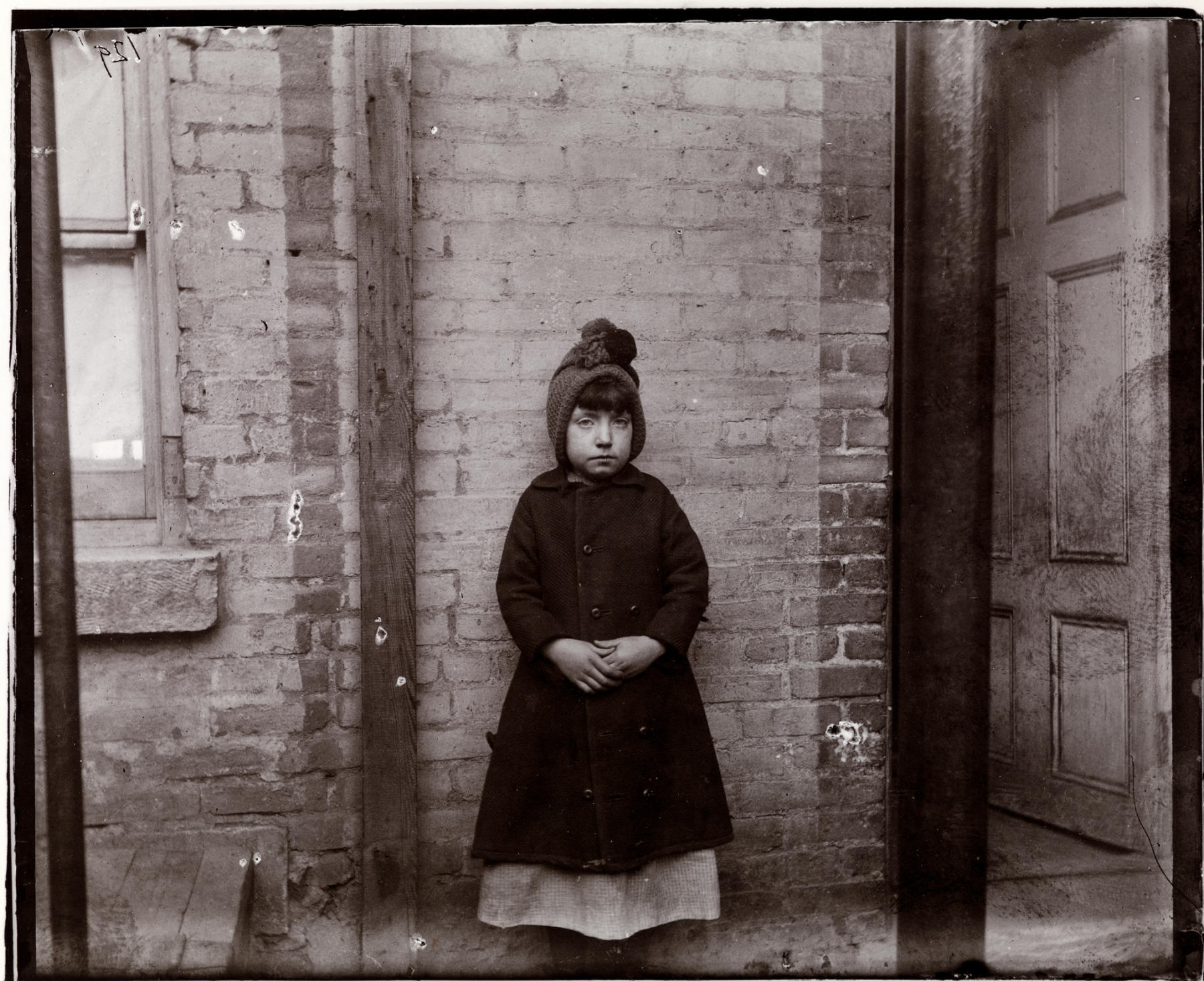
“ ‘I Scrubs’ — Little Katie from the West 52nd Street Industrial School.” 1891-92.
Jacob A. Riis, Museum of the City of New York
Revealing Riis’s Other Half of New York NYT Oct. 22, 2015
https://lens.blogs.nytimes.com/2015/10/22/
Danish American social reformer, "muckraking" journalist and social documentary photographer http://en.wikipedia.org/wiki/Jacob_Riis
A Danish-born police reporter with a knack of publicity and an abiding Christian faith, Jacob Riis won international recognition for his 1890 bestseller, “How the Other Half Lives,” which exposed the desperate and squalid conditions of New York City’s tenement slums and gave momentum to a sanitary reform movement that started in the 1840s and culminated in New York State’s landmark Tenement House Act of 1901.
Born in the rural town of Ribe in northern Denmark, Riis immigrated to New York in 1870 and spent five years as an itinerant worker.
He turned to journalism in 1873 and was hired in 1877 as a police reporter at The New York Tribune, where he worked until 1890.
He began taking photographs in 1888, after the invention of magnesium flash powder in Germany allowed photographic images to be captured in little light.
He first began presenting his photographs as lantern slides as part illustrated lectures that were presented as entertainment.
Although he viewed his photography as ancillary to his writing, today he is recognized as a important predecessor to social documentarians like Lewis Hine and Dorothea Lange. http://www.nytimes.com/topic/person/jacob-a-riis
https://www.nytimes.com/topic/person/
https://en.wikipedia.org/wiki/
https://archive.nytimes.com/lens.blogs.nytimes.com/2015/10/22/
https://www.nytimes.com/slideshow/2008/02/27/
Camille Silvy France 1834-1910
https://www.npg.org.uk/index.php?id=5754
https://jeudepaume.org/evenement/
http://www.lemonde.fr/culture/article/2010/07/28/
http://www.lemonde.fr/culture/portfolio/2010/07/23/
http://www.telegraph.co.uk/culture/photography/7868414/
John Forbes White UK 1831-1904
https://www.nationalgalleries.org/art-and-artists/artists/
Eadweard Muybridge UK 1830-1904
Slices of time: Eadweard Muybridge's cinematic legacy video San Francisco Museum of Modern Art 2 August 2017 YouTube https://www.youtube.com/watch?v=wNU7sXkZmSw
https://fraenkelgallery.com/artists/
https://www.victorian-cinema.net/
https://www.theguardian.com/artanddesign/
https://en.wikipedia.org/wiki/
https://www.theguardian.com/books/2025/apr/21/
https://www.theguardian.com/books/2019/dec/12/
http://www.theguardian.com/artanddesign/gallery/2015/oct/09/
http://www.theguardian.com/artanddesign/picture/2013/jun/15/
https://www.youtube.com/watch?v=5Awo-P3t4Ho - 7 April 2013
https://www.tate.org.uk/whats-on/tate-britain/exhibition/
http://www.guardian.co.uk/artanddesign/2010/aug/29/
http://www.guardian.co.uk/artanddesign/interactive/2010/apr/27/
https://www.npr.org/2010/04/13/
Linnaeus Tripe UK 1822-1902
British photographer Captain Linnaeus Tripe documented the stunning cultural artefacts of Burma and South India in the mid-19th century with an unprecedented series of photos.
https://www.theguardian.com/artanddesign/gallery/2015/feb/23/
https://en.wikipedia.org/wiki/
https://www.theguardian.com/artanddesign/gallery/2015/feb/23/
Mathew B. Brady USA ca. 1822-1896
America's most sought-after portrait photographer, who numbered eighteen Presidents among his sitters, Matthew Brady's historical legacy rests not only on the "Gallery of Illustrious Americans" he recorded, but also on his work as a pioneer of photo journalism in America.
His classic black and white images of the Civil War remain one of the most powerful studies ever of the horrors of armed conflict. http://www.pbs.org/wnet/ihas/icon/brady.html
Mathew Brady did not actually take many of the Civil War photographs attributed to him.
More of a project manager, he spent most of his time supervising his corps of traveling photographers, preserving their negatives and buying others from private photographers fresh from the battlefield, so that his collection would be as comprehensive as possible.
When photographs from his collection were published, whether printed by Brady or adapted as engravings in publications, they were credited with Brady's name (e.g., "Photograph by Brady" or "Negative by M. B. Brady, New York"), although they were actually the work of many different people.
In 1862 Brady shocked America by displaying Alexander Gardner's and James Gibson's photographs of battlefield corpses from Antietam.
This exhibition marked the first time most people witnessed the carnage of war.
The New York Times said that Brady had brought "home to us the terrible reality http://www.loc.gov/pictures/collection/cwp/bradynote.html
http://www.loc.gov/pictures/collection/cwp/bradynote.html
https://en.wikipedia.org/wiki/
https://archive.nytimes.com/opinionator.blogs.nytimes.com/2012/09/24/
https://archive.nytimes.com/opinionator.blogs.nytimes.com/2011/07/25/
https://www.nytimes.com/1862/10/20/
Thomas Annan UK 1829-1887
https://en.wikipedia.org/wiki/
https://www.theguardian.com/cities/gallery/2017/jun/02/
George Bradford Brainerd USA 1845-1887
civil engineer, amateur photographer, and an amateur natural historian.
https://en.wikipedia.org/wiki/
https://en.wikipedia.org/wiki/
https://www.theguardian.com/artanddesign/gallery/2025/oct/14/
Timothy H. O'Sullivan USA 1840-1882
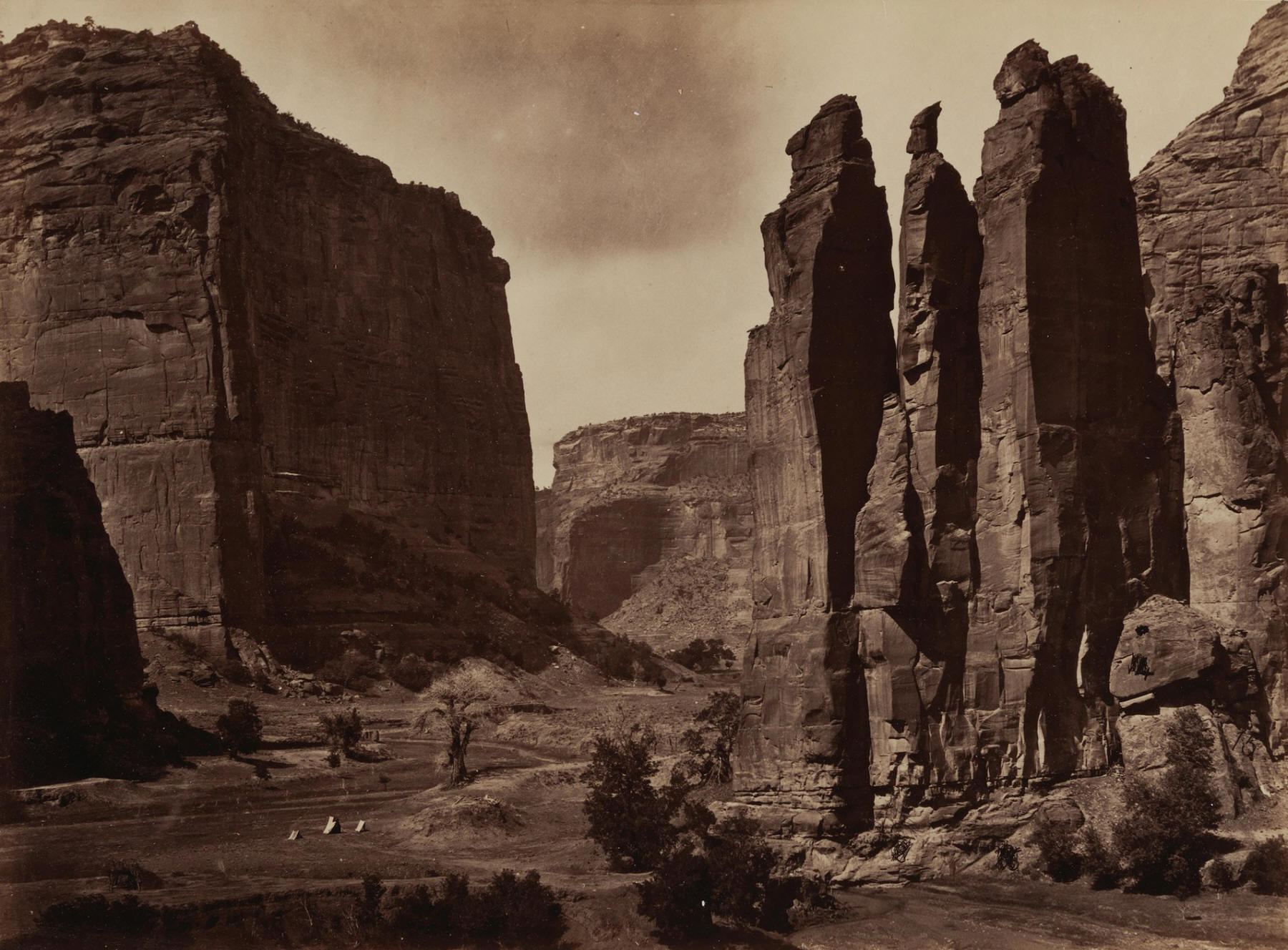
Timothy H O’Sullivan, Cañon de Chelle, 1870-1874
Preceding all of them though was Timothy H O’Sullivan, who photographed the American civil war before becoming one of the first to document the west of the country – which was at this point almost entirely undeveloped
The jewels of the new SFMOMA photography collection – in pictures G Monday 9 May 2016 07.51 BST
http://www.theguardian.com/artanddesign/gallery/2016/may/09/
Timothy O’Sullivan was a pioneer in many senses of the word.
He was one of the very early practitioners of wet plate photography – believed to have worked with Civil War photographer Matthew Brady.
He was also an explorer.
After photographing the Civil War, he headed out to document the great American West which, at the time, was a vast and unknown frontier.
O’Sullivan was the photographer on two key Western surveys: the King survey of the Fortieth Parallel, and the Wheeler survey.
Through these two projects, photography became a new and integral part of science documentary.
Although he accumulated an enormous library of glass plates, O’Sullivan remained almost forgotten until around the 1970s, when there was a growing interest in landscape photography.
https://www.npr.org/sections/pictureshow/2010/04/16/
https://en.wikipedia.org/wiki/
https://www.theguardian.com/artanddesign/gallery/2016/may/09/
https://www.npr.org/sections/pictureshow/2010/04/16/
Julia Margaret Cameron UK 1815-1879
William Henry Fox Talbot UK 1800-1877
https://www.bbc.co.uk/history/historic_figures/
https://en.wikipedia.org/wiki/
https://www.theguardian.com/artanddesign/gallery/2021/apr/23/
https://www.nytimes.com/2008/04/17/
Roger Fenton UK 1819-1869
Roger Fenton is a towering figure in the history of photography, the most celebrated and influential photographer in England during the medium's "golden age" of the 1850s.
Before taking up the camera, he studied law in London and painting in Paris.
He traveled to Russia in 1852 and photographed the landmarks of Kiev and Moscow;
founded the Photographic Society (later designated the Royal Photographic Society) in 1853;
was appointed the first official photographer of the British Museum in 1854;
achieved widespread recognition for his photographs of the Crimean War in 1855;
and excelled throughout the decade as a photographer in all the medium's genres —architecture, landscape, portraiture, still life, reportage, and tableau-vivant. http://www.metmuseum.org/toah/hd/rfen/hd_rfen.htm
https://www.metmuseum.org/toah/hd/
https://en.wikipedia.org/wiki/
https://archive.nytimes.com/lens.blogs.nytimes.com/2018/01/18/
https://www.theguardian.com/artanddesign/2017/aug/03/
https://www.theguardian.com/artanddesign/gallery/2015/feb/25/
John Beasley Greene France, USA 1832-1856
It all started here: the dawn of photography – in pictures
Nelson’s Column being built, the pyramids of Giza, soldiers in the Crimean War and fishwives in Edinburgh ...
here’s what the pioneers of a newly invented medium, from Roger Fenton to William Henry Fox Talbot, picked as their subjects in the 1840s and 50s
Salt and Silver: Early Photography 1840-1860 is at Tate Britain, London SW1, until 7 June, 2015
http://www.theguardian.com/artanddesign/gallery/2015/feb/25/
https://www.theguardian.com/artanddesign/gallery/2015/feb/25/
https://www.tate.org.uk/whats-on/tate-britain/
Louis-Jacques-Mandé Daguerre (1787-1851) and the invention of photography
The Daguerreotype - Photographic Processes Series Chapter 2 of 12 George Eastman Museum Video 12 December 2014 YouTube https://www.youtube.com/watch?v=d932Q6jYRg8
On January 7, 1839, members of the French Académie des Sciences were shown products of an invention that would forever change the nature of visual representation: photography.
The astonishingly precise pictures they saw were the work of Louis-Jacques-Mandé Daguerre (1787–1851), a Romantic painter and printmaker most famous until then as the proprietor of the Diorama, a popular Parisian spectacle featuring theatrical painting and lighting effects.
Each daguerreotype (as Daguerre dubbed his invention) was a one-of-a-kind image on a highly polished, silver-plated sheet of copper.
Daguerre's invention did not spring to life fully grown, although in 1839 it may have seemed that way.
In fact, Daguerre had been searching since the mid-1820s for a means to capture the fleeting images he saw in his camera obscura, a draftsman's aid consisting of a wood box with a lens at one end that threw an image onto a frosted sheet of glass at the other.
In 1829, he had formed a partnership with Nicéphore Niépce, who had been working on the same problem —how to make a permanent image using light and chemistry— and who had achieved primitive but real results as early as 1826.
By the time Niépce died in 1833, the partners had yet to come up with a practical, reliable process. http://www.metmuseum.org/toah/hd/dagu/hd_dagu.htm
https://en.wikipedia.org/wiki/
https://www.metmuseum.org/toah/hd/dagu/hd_dagu.htm
Related > Anglonautes > Arts
Related > Anglonautes > Vocapedia
radio, broadcasting, podcasting, TV, journalism, photojournalism, journalist safety, fake news, misinformation, disinformation,
|
|
|