|
|
|
Abdullah Ibrahim 1934-2026
With love and admiration, Camille.
Abdulllah Ibrahim performing in Paris in 1977. video NPR
Bob Boilen March 9, 2022 The Tiny Desk is working from home for the foreseeable future. Introducing NPR Music's Tiny Desk (home) concerts, bringing you performances from across the country and the world.
It's the same spirit — stripped-down sets, an intimate setting — just a different space.
It’s less a concert and more witnessing a master thoughtfully creating an atmosphere, a vibe.
And for 13 short minutes, I feel seated in Abdullah Ibrahim’s home in Chiemgau, Germany, witnessing seven decades of experience slowly dripping from his fingers and touching my soul.
Abdullah Ibrahim, now 87, has witnessed the horrors of apartheid.
He grew up in South Africa and composed what would become known as the “anti-apartheid anthem,” “Mannenberg.”
Nelson Mandela called him “our Mozart.”
He also successfully made music under the name Dollar Brand, and worked with jazz legends including Duke Ellington, Max Roach, Don Cherry and Archie Shepp.
In 1968, he converted to Islam and changed his name from Dollar Brand; more recently, he became an NEA Jazz Master.
In my 18 years directing All Things Considered, I’d often reach for his music to play between news stories to give the audience a chance to think and reflect. His music is like that; it’s mind-opening.
And here he is seated at his piano, his white hair luminous, his fingers delicate, while he reflects on the past and helps clarify the present.
The music is from his newest album Solotude, a recording made to an empty concert hall in southeast Germany during the 2020 lockdown, which for me became a source of calm when it was released toward the end of 2021.
To witness this Tiny Desk (home) concert, I suggest you take these next 13 minutes, turn off your distractions and discover the strength in delicate reflection from a gentle man who has some much to share.
SET LIST “Blue Bolero” “Signal On The Hill” “Once Upon A Midnight”
YouTube https://www.youtube.com/watch?v=L5i4stj4M30
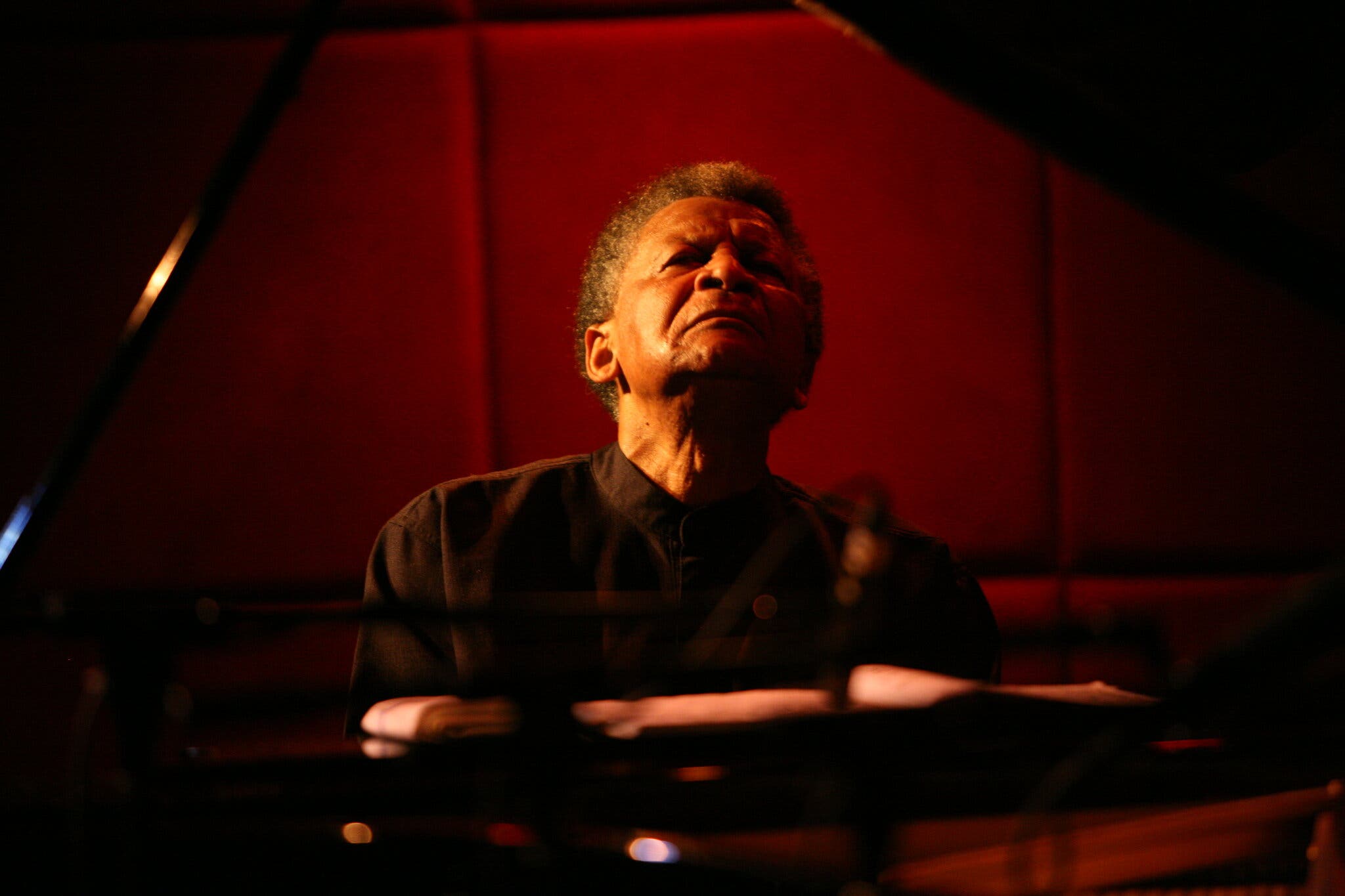
Mr. Ibrahim in 2009 at the Jazz Standard club in New York.
Duke Ellington heard him in the early 1960s and propelled his American recording career.
Photograph: G. Paul Burnett
Abdullah Ibrahim, Eminent South African Jazz Pianist, Dies at 91 His song “Mannenberg” became the unofficial anthem of the country’s fight against apartheid, with Nelson Mandela calling him “our Mozart.” The New York Times June 15, 2026
https://www.nytimes.com/2026/06/15/
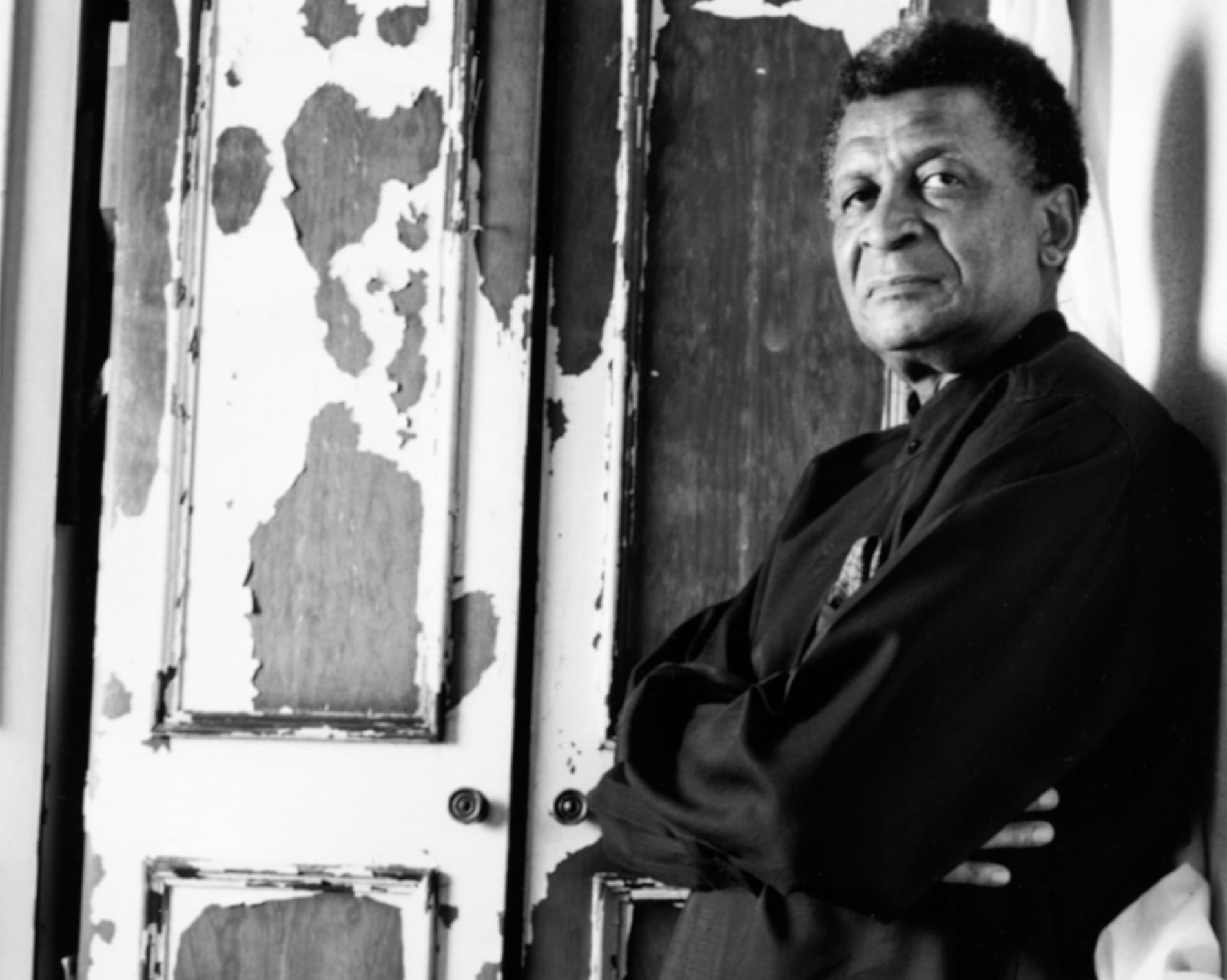
Abdullah Ibrahim.
Photograph: Eamonn McCabe The Guardian
South African jazz pianist Abdullah Ibrahim dies aged 91 The accomplished musician, who recorded over 70 albums in his career, died peacefully in Germany after a short illness The Guardian Mon 15 Jun 2026 19.03 CEST Last modified on Tue 16 Jun 2026 12.47 CEST
https://www.theguardian.com/music/2026/jun/15/
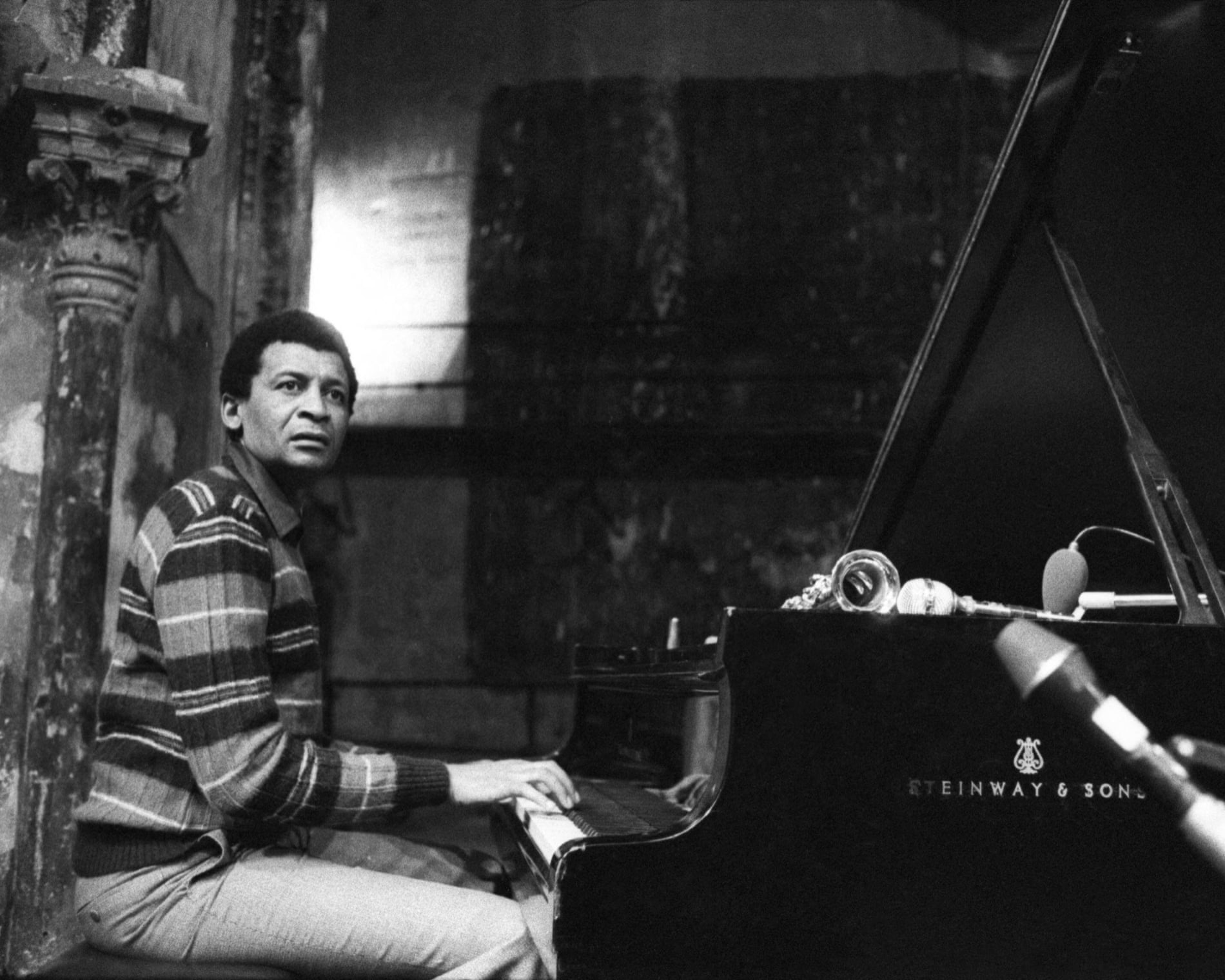
Abdulllah Ibrahim performing in Paris in 1977.
Photograph: Philippe Gras Alamy
Obituary Abdullah Ibrahim obituary South African jazz pianist, composer and improviser who cast a spell on audiences all over the world The Guardian Tue 16 Jun 2026 18.25 CEST Last modified on Wed 17 Jun 2026 19.09 CEST
https://www.theguardian.com/music/2026/jun/16/
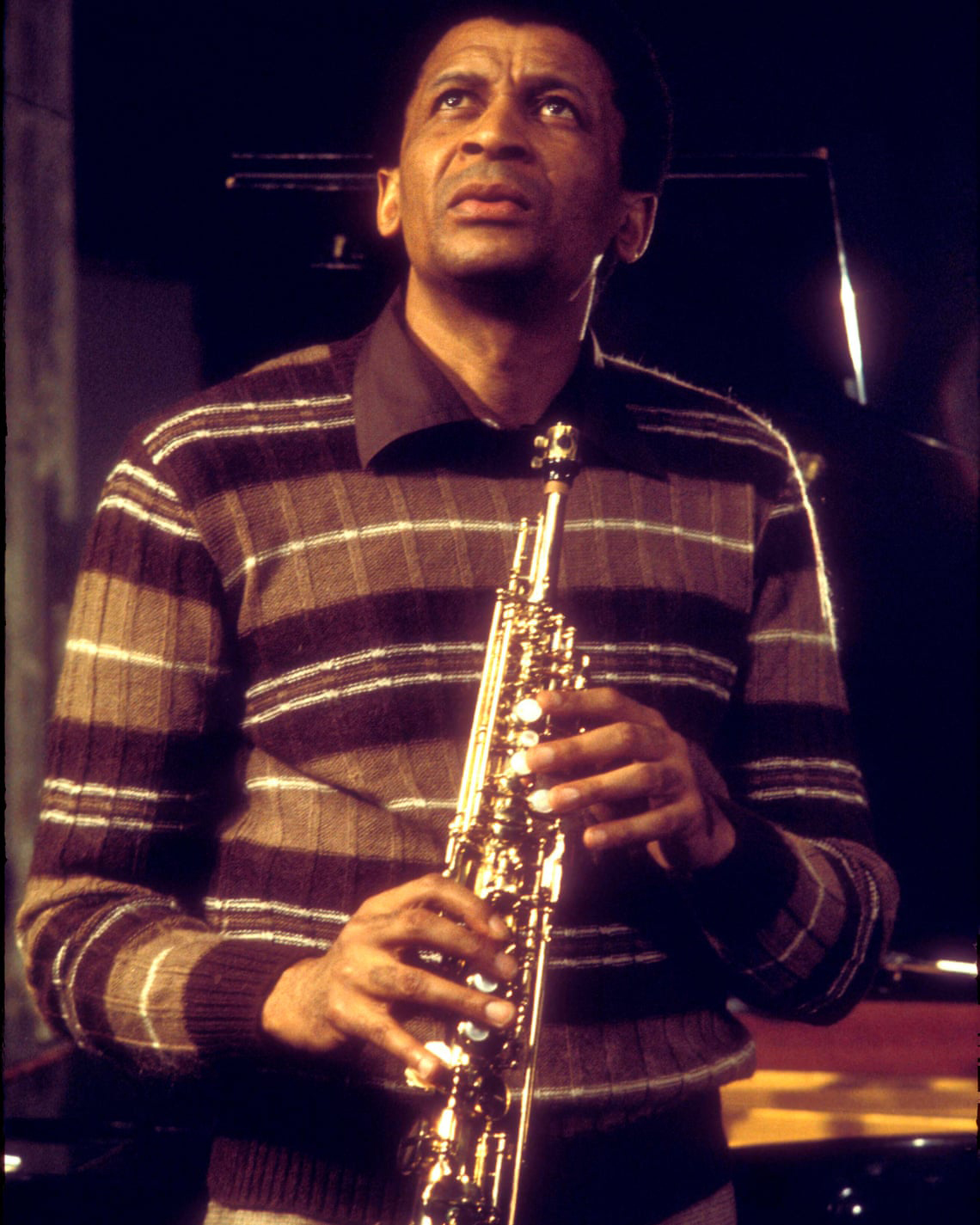
Abdullah Ibrahim in 1977.
Photograph: Christian Rose
Obituary Abdullah Ibrahim obituary South African jazz pianist, composer and improviser who cast a spell on audiences all over the world The Guardian Tue 16 Jun 2026 18.25 CEST Last modified on Wed 17 Jun 2026 19.09 CEST
https://www.theguardian.com/music/2026/jun/16/
Abdullah Ibrahim SA, USA 1934-2026
known as Dollar Brand before converting to Islam in the late 1960s
https://www.nytimes.com/2026/06/15/
Born in 1934 as Adolph Johannes Brand, Ibrahim grew up under apartheid in Cape Town, South Africa.
He loved the jazz he heard on the radio, and sometimes bought jazz records from black American GIs.
As a young man, he played in groups with names like the Tuxedo Slickers.
But public mixing of the races was illegal, and jazz players in integrated bands risked arrest playing in underground clubs run by gangsters.
Ibrahim became a political exile in 1976, after he announced his membership in Nelson Mandela's African National Congress.
But soon before he left South Africa, Ibrahim and his band went into the studio in Cape Town.
They recorded a tune called "Mannenberg."
Named for a segregated township on the fringe of Cape Town, that piece became an anthem of the anti-Apartheid movement.
Years later, Ibrahim performed when Mandela was sworn in as president in 1994.
During his years of exile in New York, Ibrahim performed with many of the jazz musicians who inspired him — including luminaries such as Max Roach and Duke Ellington.
It was Ellington who got him his first record deal in 1964.
That was when he was still known as "Dollar" Brand.
Seeking peace and ritual he hadn't found in church, he converted to Islam in 1968, and changed his name to Abdullah Ibrahim.
https://www.npr.org/2007/08/26/
During the apartheid era in the 1960s, Ibrahim moved to New York City and, apart from a brief return to South Africa in the 1970s, remained in exile until the early 1990s.
Over the decades, he toured the world extensively, appearing at major venues either as a solo artist or playing with other renowned musicians, including Max Roach, Carlos Ward, and Randy Weston, as well as collaborating with classical orchestras in Europe.
With his wife, the jazz singer Sathima Bea Benjamin, Ibrahim was father to two children, including the New York underground rapper Jean Grae.
https://en.wikipedia.org/wiki/
Mr. Ibrahim — who was known as Dollar Brand before converting to Islam in the late 1960s — folded the music of his South African hometown into an ongoing conversation with the latest evolutions in American and European jazz.
For years, he was embraced by the standard-bearers of the avant-garde music scene, including the saxophonist Ornette Coleman.
For all its disparate components, Mr. Ibrahim’s music never sounded like a crude synthesis — perhaps by dint of the unhurried grace of his playing and the deep spirituality of his approach.
In his frequent solo concerts, he often performed lengthy, unbroken sets, fluidly folding together different themes and compositions as inspiration dictated.
(...)
Mr. Ibrahim was a leading figure on Cape Town’s jazz scene by the time he fled South Africa in 1962 and landed in Zurich.
Duke Ellington, the American band leader, who was touring Europe at the time, saw him perform at the Africana Club and was impressed.
He subsequently supervised the recording of an album by Mr. Ibrahim.
“Duke Ellington Presents the Dollar Brand Trio,” released in 1964, touched off what would be a prolific and, at turns, transcendent recording career.
Among the more than 70 albums Mr. Ibrahim released, a number are considered jazz classics, including “African Space Program” (1973), featuring a 12-piece orchestra; “Banyana” (1976), an expressionist trio recording; “African Marketplace” (1980), celebrating the goema rhythms of Cape Town carnivals; and “Water From an Ancient Well” (1986), an achingly beautiful sextet recording.
As the apartheid regime crumbled, Mr. Ibrahim regained the right to enter South Africa.
In 1994, he performed at the presidential inauguration of Nelson Mandela, who hailed Mr. Ibrahim as “our Mozart.”
For the rest of his life, Mr. Ibrahim split his time among residences in Cape Town, New York and Germany.
In 2019, he was named a Jazz Master by the National Endowment for the Arts.
‘Code of Silence’
Adolph Johannes Brand was born on Oct. 9, 1934, to a Sotho man named Sentso, whom he never knew, and Rachel Brand, who was of mixed race and classed as “colored” under the apartheid system.
When Adolph was 4, his father, a house painter, was shot dead under murky circumstances.
It was a tragedy kept from him until adulthood, when he also discovered that the woman who had raised him was his grandmother, not his mother;
he had been told Rachel was his sister.
“My grandparents gave me their name so I’d be classified as colored,” a label that afforded them a higher social status than if they had been deemed Black, he told The Guardian in 2001.
He added: “That code of silence was created by the system. I was saddled with a lot of bitterness at an early age.”
Another thing the apartheid system had taken, he said, was the right to spiritual self-determination.
“We were robbed of our traditional belief system,” he said in an interview with the N.E.A., adding, “The A.M.E. Church served as a home for our vision, for our perspective of freeing ourselves and expressing our spirituality in our own tradition.”
His grandmother had helped found the local A.M.E. Church in Kensington, the hardscrabble suburb where he grew up.
She and his mother served as pianists and singers at church;
his mother also played piano at movie houses, accompanying silent films.
They both encouraged young Adolph’s interest in the instrument, and he started taking lessons at age 7.
He immediately started composing his own music.
In Cape Town, a port city that included large populations of Indian, Chinese, Malaysian and other backgrounds,
he was at the center of a cultural mix that naturally disrupted the apartheid system’s ethic of division — especially in District Six, the cosmopolitan inner-city neighborhood where his family moved during his childhood.
(...)
He had hoped to become a doctor but was barred from medical school because of apartheid.
Instead, he read books and practiced piano for much of the day.
In 1962, he and his girlfriend, the singer Sathima Bea Benjamin, left South Africa amid the escalating violence of apartheid and a crackdown on the District Six jazz scene.
That same year, Mr. Mandela was imprisoned and the African National Congress was banned.
His former bandmates from Cape Town, Mr. Gertze and Mr. Ntshoko, followed him to Zurich, where they continued performing together, including on the album he recorded under Mr. Ellington’s supervision.
(...)
After the Soweto uprising in 1976, Mr. Ibrahim fled the country, publicly declared his support for the African National Congress and began participating in benefit concerts, vowing not to return until democratic rule was established.
The apartheid government revoked his South African citizenship.
He settled again in New York with Ms. Benjamin and their two children, living for many years at the Chelsea Hotel.
https://www.nytimes.com/2026/06/15/
https://www.npr.org/artists/15014572/
https://en.wikipedia.org/wiki/
https://www.theguardian.com/music/2026/jun/16/
https://www.theguardian.com/music/2026/jun/16/
https://www.theguardian.com/music/2026/jun/15/
https://www.npr.org/2026/06/16/
https://www.npr.org/2026/06/15/
https://www.nytimes.com/2026/06/15/
https://www.npr.org/2024/06/05/
https://www.theguardian.com/
https://www.theguardian.com/music/2019/sep/11/
https://www.nytimes.com/2019/07/31/
https://www.npr.org/2019/06/30/
https://www.npr.org/2017/10/13/
https://www.nytimes.com/2017/04/28/
https://www.npr.org/2017/04/26/
https://www.theguardian.com/music/2014/dec/04/
https://www.theguardian.com/music/musicblog/2011/feb/09/
https://www.theguardian.com/music/2010/nov/25/
https://www.theguardian.com/music/2010/apr/01/
https://www.theguardian.com/music/2010/mar/11/
https://www.theguardian.com/music/2009/aug/08/
https://en.wikipedia.org/wiki/Senzo - 2008
https://www.theguardian.com/music/2008/nov/29/
https://www.theguardian.com/music/2008/may/19/
https://www.npr.org/2007/08/26/
https://www.theguardian.com/music/2003/oct/28/
https://www.theguardian.com/music/2003/jan/31/
https://www.theguardian.com/music/2001/dec/08/
https://www.nytimes.com/1983/01/30/
https://www.nytimes.com/1979/06/04/
https://www.nytimes.com/1976/03/15/
https://en.wikipedia.org/wiki/
https://www.nytimes.com/1969/12/29/
https://www.nytimes.com/1967/12/01/
https://www.nytimes.com/1967/06/04/
Abdullah Ibrahim, Eminent South African Jazz Pianist, Dies at 91
By Giovanni Russonello The New York Times June 15, 2026
Abdullah
Ibrahim, a jazz pianist and composer whose elegant, meditative style mingled the
sounds of his native Cape Town with musical traditions from around the world,
making him an admired ambassador of the anti-apartheid movement, died on Monday
in Prien am Chiemsee, a town south of Munich. He was 91.
“Duke
Ellington Presents the Dollar Brand Trio,” released in 1964, touched off what
would be a prolific and, at turns, transcendent recording career. Among the more
than 70 albums Mr. Ibrahim released, a number are considered jazz classics,
including “African Space Program” (1973), featuring a 12-piece orchestra;
“Banyana” (1976), an expressionist trio recording; “African Marketplace” (1980),
celebrating the goema rhythms of Cape Town carnivals; and “Water From an Ancient
Well” (1986), an achingly beautiful sextet recording.
‘Code of Silence’
“Where I grew
up, there is every kind of music,” he told the N.E.A. He studied Indian ragas
and talas, Chinese folk song, the Zulu music sung in work camps and the rhythmic
songs of street celebrations.
‘Mannenberg’
Mr. Ibrahim and Ms. Benjamin married in London in 1965 and that year he released “Anatomy of a South African Village,” the first of a series of well-received recordings for the British label Black Lion. That July, he
made his U.S. debut at the Newport Jazz Festival, followed by performances at
Carnegie Hall and the Village Vanguard in New York City. The next year, he
performed five concerts with the Duke Ellington Orchestra, and soon after that,
he spent six months in the band of Elvin Jones, the drummer, who had recently
left John Coltrane’s quartet. The tune
quickly became the unofficial anthem of the country’s freedom struggle. “We had
created something which was tradition, but it was affirmation of a new dawn
coming,” Mr. Ibrahim told NPR in 2007. Starting in
1981, he briefly ran his own label, Ekapa (the Xhosa term for Cape Town). Two
years later, he formed Ekaya, a midsize group of New York-based musicians that
would remain his flagship ensemble for decades. He composed and performed the
soundtracks for the films “Chocolat” (1988) and “No Fear, No Die” (1990), both
by the French director Claire Denis, and for “Tilaï” (“The Law,” 1990), by the
Burkina Faso director Idrissa Ouédraogo.
Ash Wu contributed reporting.
A version of this article appears in print on June 17, 2026, Section B, Page 11 of the New York edition with the headline: Abdullah
Ibrahim, This article has an audio version.
Related > Anglonautes > Arts > Music
Related > Anglonautes > Vocapedia > Arts > Music
Related > Anglonautes > Vocapedia
countries > South Africa > 20th century >
race relations > USA > African-Americans
Related > Anglonautes > History
20th century > USA > Civil rights
17th, 18th, 19th, 20th century
Related > USA
https://www.npr.org/music/genres/
https://www.nytimes.com/topic/subject/
|
|
|